The elegant capital of the Cyclades — neoclassical, unhurried, and four hours from Athens by ferry.
Our logo takes its shape from a Cycladic figurine head — one of the flat, minimalist marble faces carved on these islands over 4,500 years ago. Their pared-back geometry felt so radical that 20th-century sculptors and painters, including Constantin Brâncuși, Amedeo Modigliani, and Pablo Picasso, drew on it directly, seeing in these ancient forms an abstraction their own era was only just discovering. It felt right to build Armia's identity around a piece of art that was minimalist before minimalism existed — carved a few hours from where you're standing now.
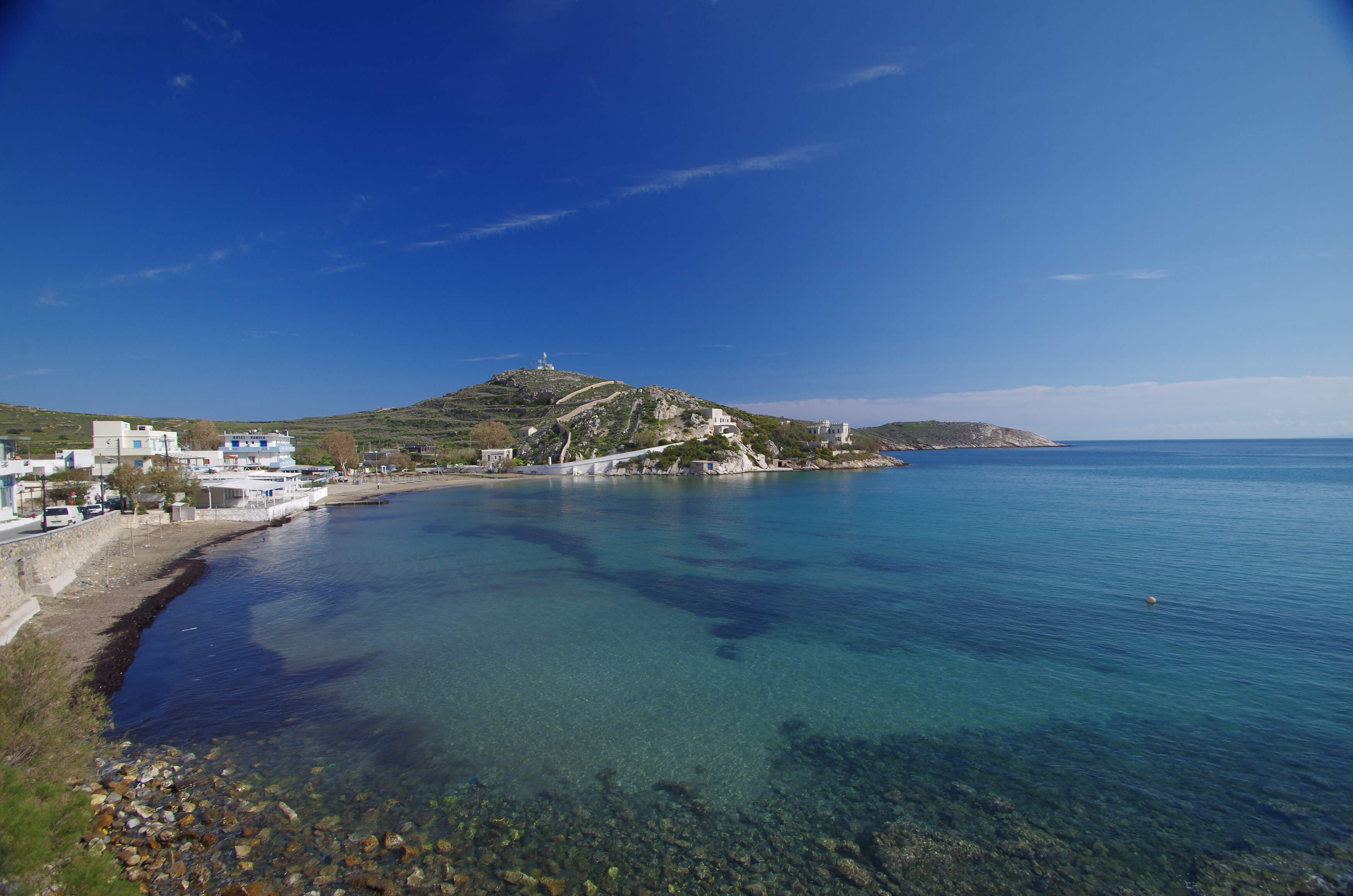
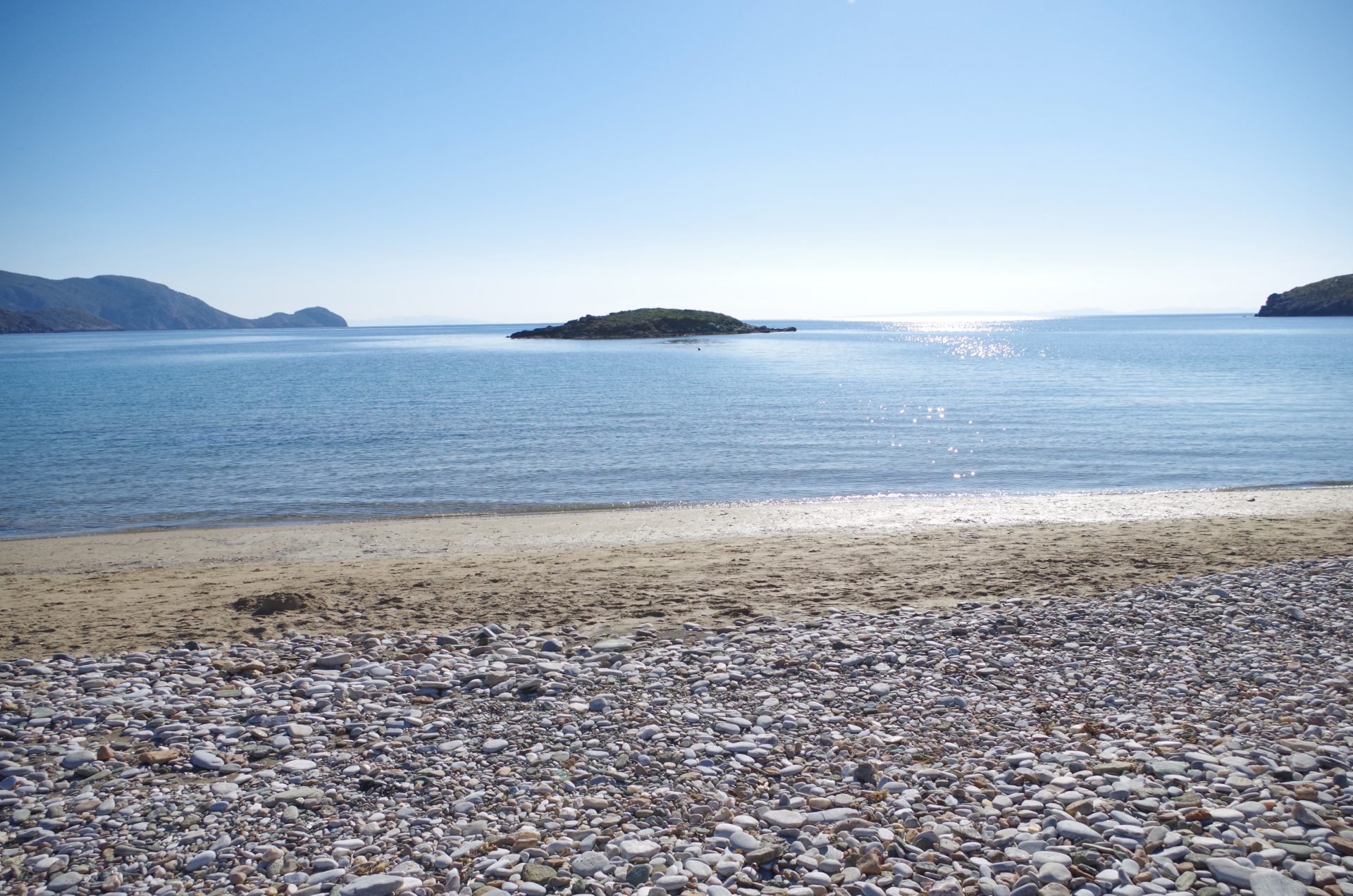
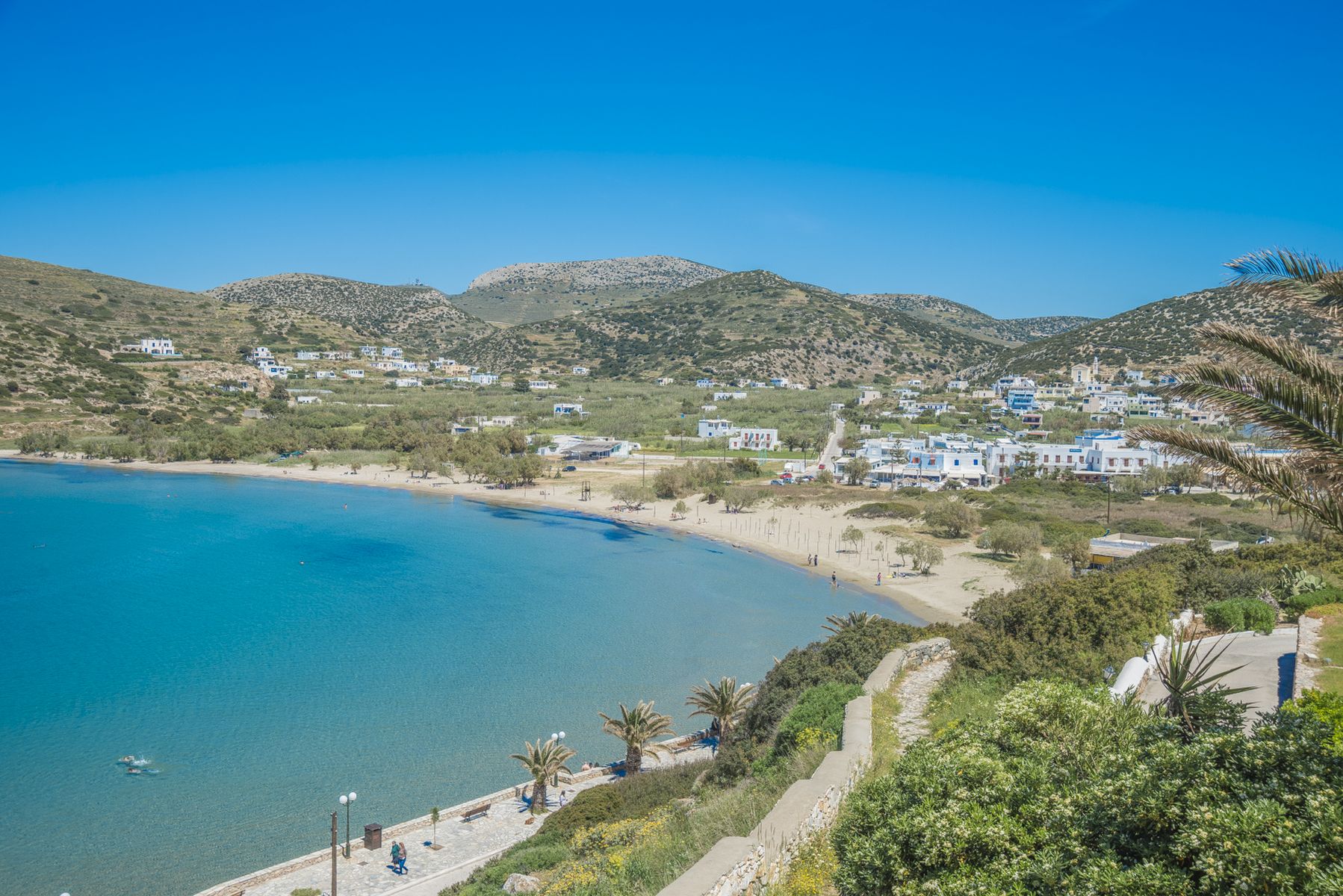
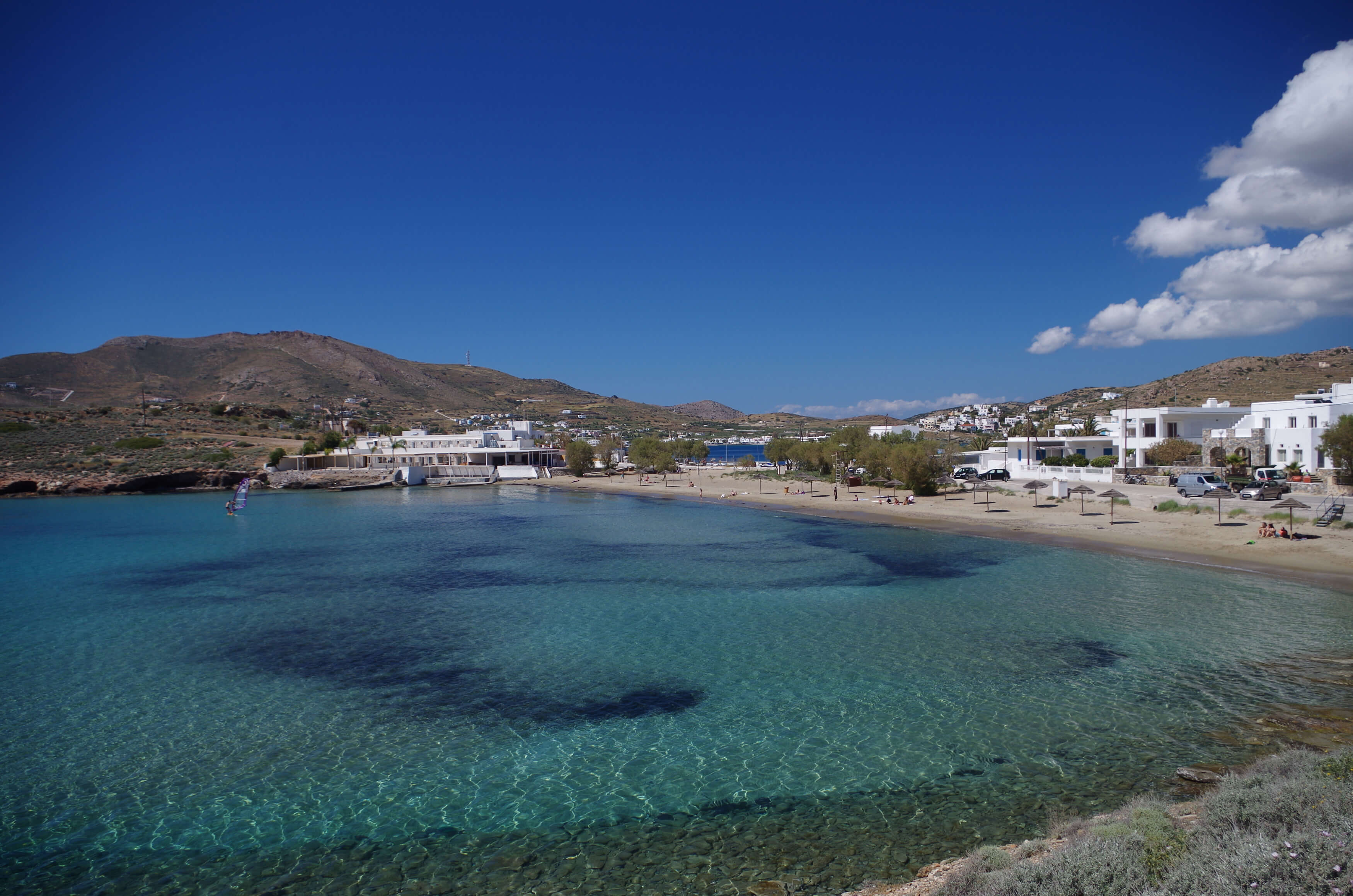
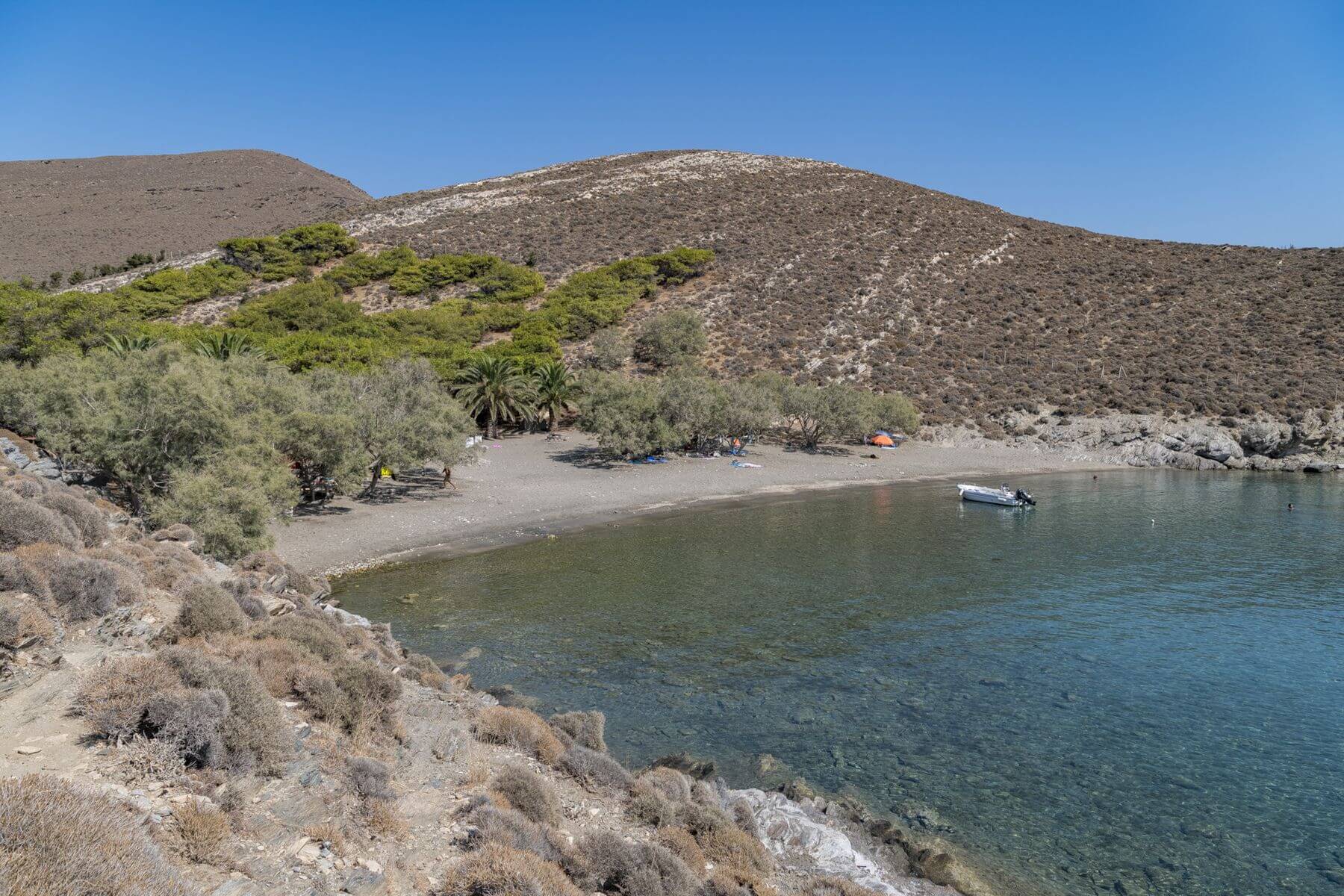
Sýros has been the administrative capital of the Cyclades since the 19th century, and it shows — marble-paved squares, opera houses, and grand neoclassical mansions built on shipping money, not souvenir shops. It's an island Greeks visit as much as anyone, which keeps it honest: good bakeries, working ports, and beaches that empty out by sunset. Armia sits on its quiet southern coast, in Vári, a short drive from all of it.
A few practical facts before you plan around it.
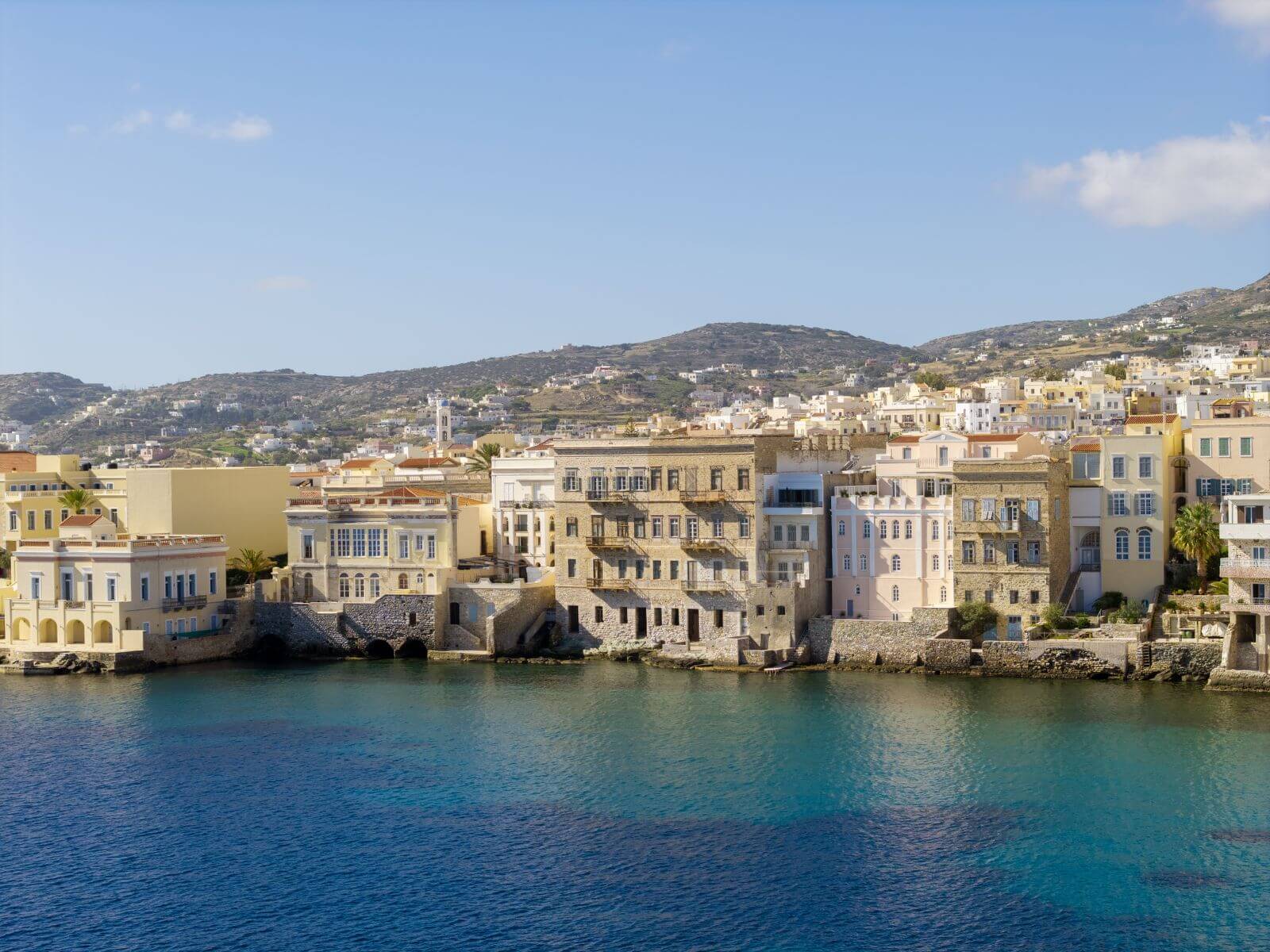
Capital of the Cyclades since 1821, and it shows in every marble step.
The Town Hall, designed by Bavarian-Greek architect Ernst Ziller — the same hand behind Athens's Academy — carries a 15.5-metre marble staircase and an Archaeological Museum in its rear wing, with Cycladic figurines dating to 3,000 BC. A few streets over, the Apollo Theatre, a miniature of Milan's La Scala, opened with Verdi's Rigoletto and still stages opera today.
Above it all, the pastel mansions of Vapória — built by 19th-century shipping families — look straight out to sea. Wander the streets, then walk down to swim off the marble platforms below, no sand required. And inside the quiet Church of the Dormition sits a small wooden icon, signed at the base: "Domínikos Theotokópoulos painted this." One of only three confirmed early works by the painter the world would come to know as El Greco.
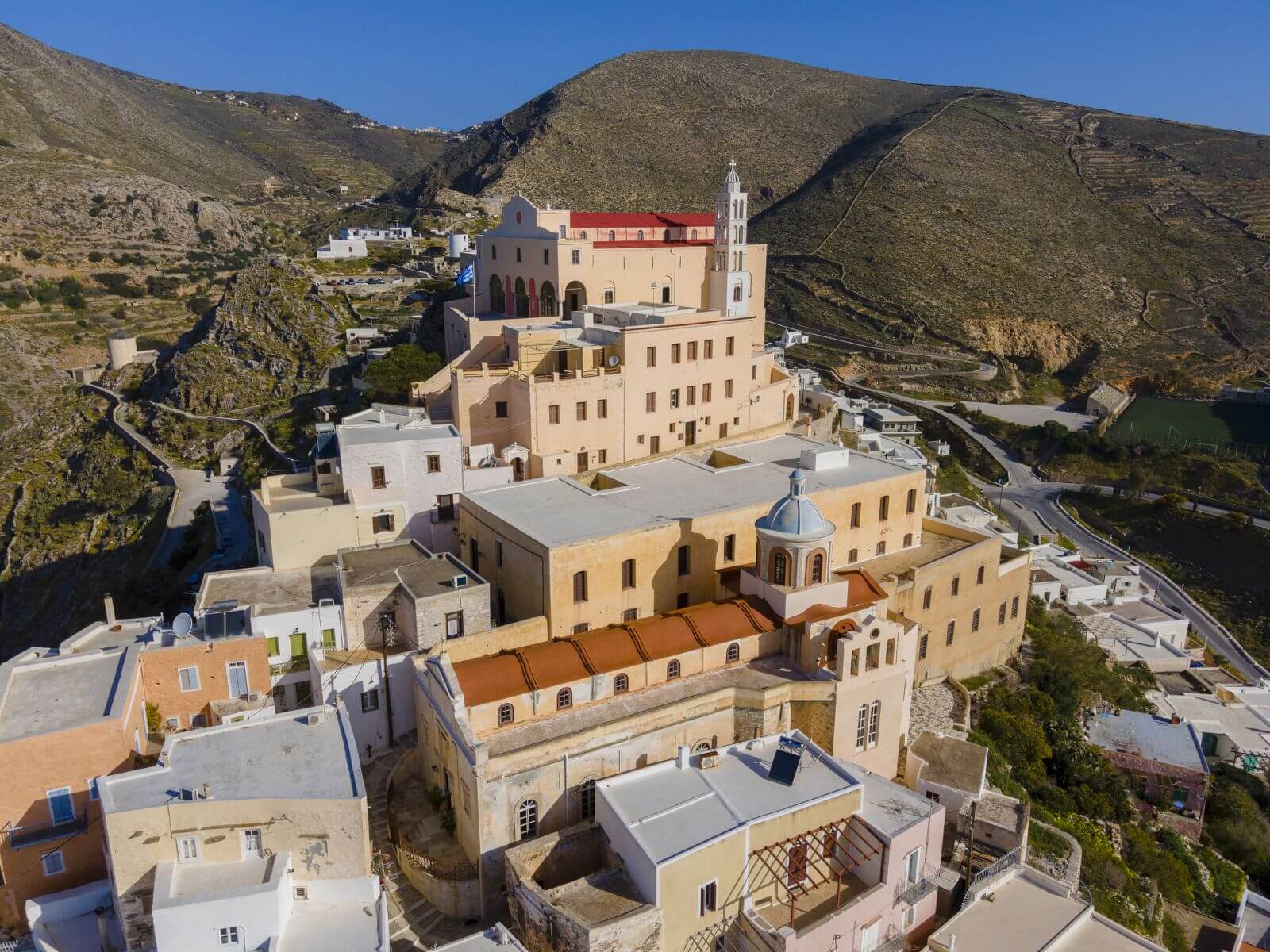
Medieval, Catholic, and six hundred years older than the town below it.
Long before Ermoúpoli existed, Áno Sýros was the island — a hilltop settlement under Venetian and later Genoese rule from the 13th century, when Catholic dukes held the Aegean as fiefs of the Latin Empire. The Catholic presence never left; it remains one of the few predominantly Catholic communities in Greece, crowned by the Cathedral of Saint George, seat of the island's Catholic diocese.
What the village really gives you, though, isn't a single sight — it's the σοκάκια, narrow whitewashed alleys barely wide enough for two, winding up to sudden sea views and half-shut chapels. This is also where Markos Vamvakaris, the father of rebétiko, was born in 1905. Walk the alleys he walked; the bouzouki was first tuned in towns like this one.
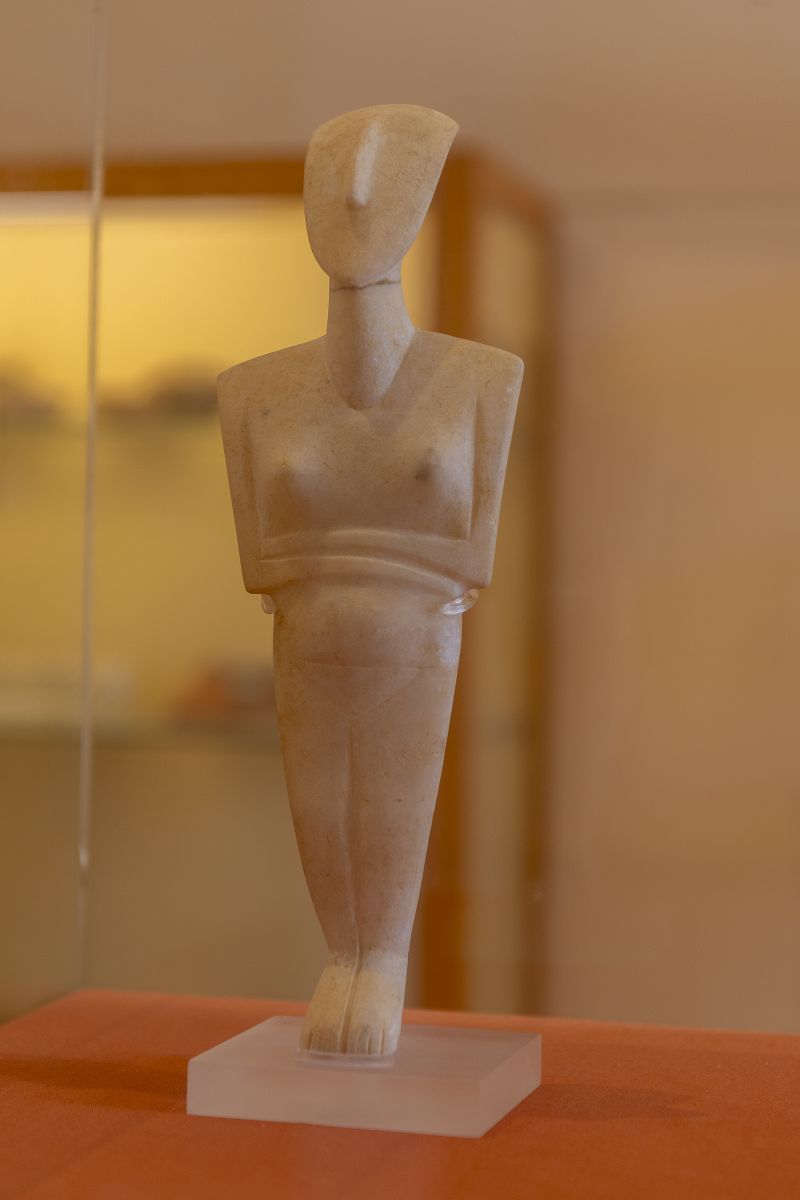
Long before Athens, before Knossos, the people of Sýros were building one of the earliest fortified settlements in the Aegean.
Up on the island's northeastern slopes, the prehistoric settlement of Kástri and the burial grounds of Chalandrianí are among the most important Early Bronze Age sites in all of Greece. Founded around 2700–2300 BC, the fortified hilltop of Kástri was protected by stone walls and circular bastions — a defensive architecture centuries ahead of its time.
Excavations here uncovered the so-called frying-pan vessels and the celebrated marble Cycladic figurines — those minimal, almost modern-looking idols that inspired Brâncuși, Modigliani and Picasso millennia later. Many are on display today in the Archaeological Museum, inside Ermoúpoli's Town Hall. The site itself is remote and largely unsigned — best visited with a local guide who knows the paths, available through the hotel on request.
Reserve on our site for the lowest available price, flexible options and a direct line to our team — no middleman.
Check rates & availabilityChoose which cookies we're allowed to use. You can change this anytime via "Cookie Preferences" in the footer.